Clarify the goal
We define what you actually want to achieve, what is already known, and which assumptions need to be tested.
OutcomeA clear goal and a smaller problem you can work on.
Technical mentoring
I help people make problems visible, compare options, and choose their own next step. I developed this approach as a Space Eagle during the 42 Warsaw Piscine and as a mentor and judge at HackYeah 2026.

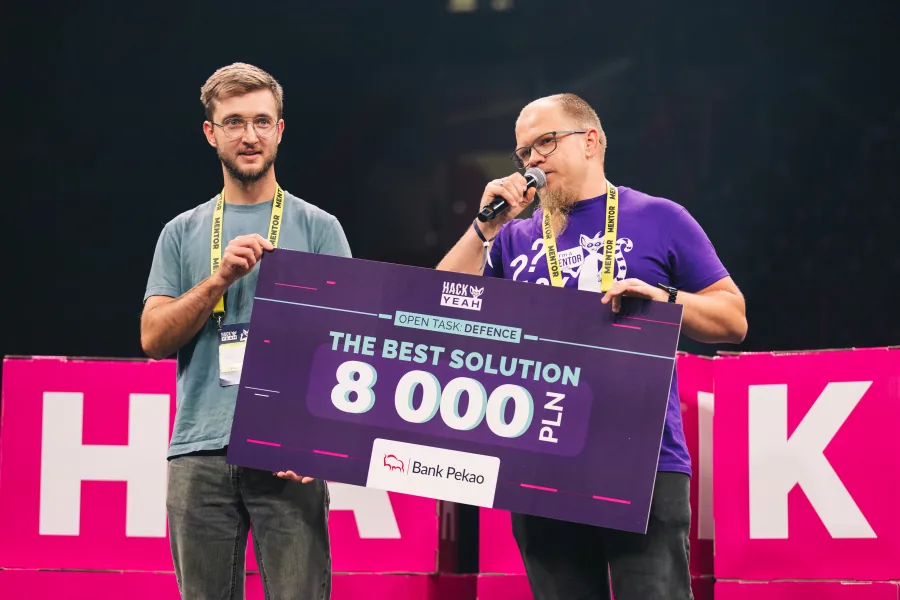
HackYeah 2026 / In practice
I mentored participants and judged projects in the Defence category. One of the teams I supported won the event’s grand prize. I also presented the Defence category award on stage on behalf of the jury. The team built the project and earned the result; my role was guidance and evaluation.
01 / How I mentor
We work on a real goal or blocker. I bring questions, structure, and relevant experience, not a ready-made answer.
We define what you actually want to achieve, what is already known, and which assumptions need to be tested.
Before: the problem feels too large or unclear to begin.After: you can name the blocker, compare options, and choose what to check next.
We turn what you learned into a realistic next step. When tools or AI are involved, you remain the decision-maker and review sensitive actions yourself.
02 / Who mentoring is for
03 / How mentoring works
You bring a goal and the context you can safely share. I guide the conversation with questions, structure, and practical examples.
Tell me what you want to achieve, what you have tried, and where you feel stuck.
We separate facts from assumptions and break the challenge into smaller parts.
I ask questions, check assumptions, and share relevant experience when it helps.
You decide what to do next and leave able to explain why.
04 / Mentoring
If you are working through a technical project and feel stuck, send me your goal, what you have already tried, and the question you cannot answer yet. If my experience is relevant, we can talk.
Ask about mentoring